What "AI Authorship" Actually Means (And Why It's Contested)
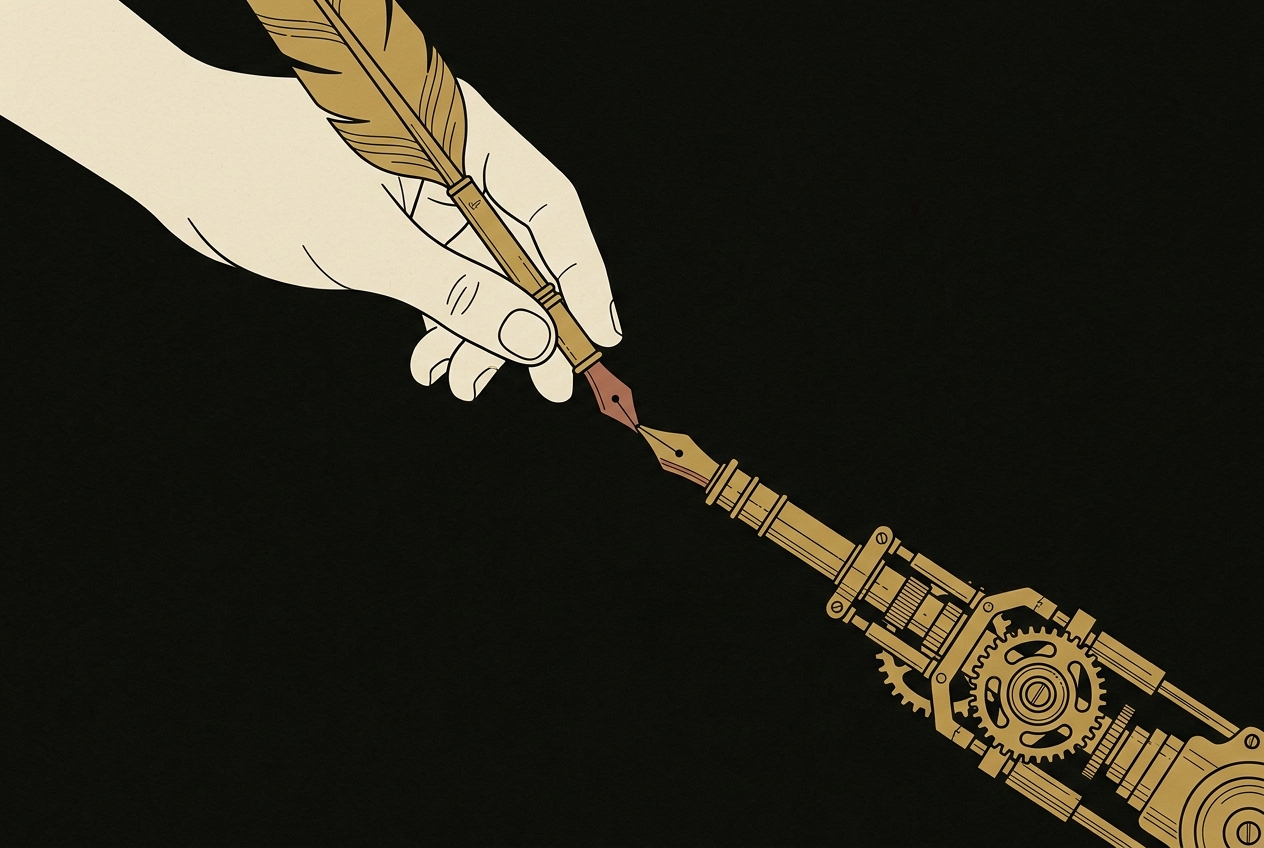
If you want to own your work, you have to be the one who actually makes it. That sounds simple. But the US Copyright Office is currently turning that simple idea into a massive headache for anyone using generative tools. They have decided that copyright only protects human authorship. If a machine does the heavy lifting, the law treats your output like it dropped out of the sky. It belongs to nobody.
The Human Spark
The law cares about the human mind. The Copyright Office calls this human authorship. It means that to get a registration, you need to prove a person created the work. They don't care how cool your prompt was. They don't care how many settings you tweaked. If the machine generates the expression, the Copyright Office won't give you a certificate.
Look at the Thaler v. Perlmutter case. Stephen Thaler tried to register an image created entirely by an AI system. He wanted the machine listed as the author. The court shut that down fast. They held that human authorship is a bedrock requirement of copyright. No human, no copyright. The machine is a tool, not an artist. If you act like a passenger while the AI drives the bus, you aren't getting legal protection for the ride.
The Zarya Line
The Office is trying to figure out where the human ends and the machine begins. This became clear with Zarya of the Dawn. This was a graphic novel where the author, Kris Kashtanova, used Midjourney to create the images. The Office registered the text and the arrangement of the pages because those were human choices. But they refused to register the individual images themselves.
They decided the images were generated by the AI, not selected or arranged by the human in a way that met the threshold of originality. Originality is the legal standard that requires a work to be independently created by a human with a modicum of creativity. If you just type a prompt and hit enter, the Office sees that as a request, not an act of creation. They aren't interested in your prompt. They are interested in your control over the final result.
Sufficient Human Control
This is the whole game now. You need to show you had sufficient human control over the output. The Office hasn't given us a perfect checklist, but they have made it clear that prompt engineering isn't enough. You have to edit, arrange, or modify the AI output until it reflects your specific creative intent. Think of it like using a camera. You don't get a copyright just for owning the camera or pointing it at a wall. You get it for the framing, the lighting, and the timing.
If you use an AI to generate a sketch and then paint over it, change the composition, or add your own distinct elements, you might have a claim. The parts you added yourself are protected. The parts the machine spit out stay in the public domain. That means anyone can take your AI-generated character or background and use it without your permission. You don't want to find yourself in a position where you can't stop someone from stealing your work because you relied too heavily on a black-box algorithm.
The Cost of Getting it Wrong
If you file for copyright, you pay about a $65 filing fee for a standard application. That might sound cheap until you realize what you are risking. If you lie to the Office or claim full ownership of work that is actually AI-generated, you are filing a fraudulent application. This can lead to your registration being canceled. If you try to sue someone for copying your work, you could be on the hook for statutory damages. These are legal penalties set by law that can range from $750 to $30,000 per work, or up to $150,000 if the court decides you acted willfully.
You need to keep records. If you use AI tools, save your drafts. Save your edits. Track your changes. The Office gives you a 3-month window after publication to register your work to get the best legal protections. If you wait longer, you lose the ability to claim those statutory damages. You also need to disclose AI content in your application. The Office is very clear about this. If you hide the fact that you used AI, you are inviting a disaster that will make your work impossible to defend in court.
Taking Ownership
The law isn't going to change just because the technology is fancy. Copyright is meant to reward human effort. It isn't a subsidy for software developers who want to replace artists. If you want to keep your work safe, you have to keep your hands on the wheel. Use the machine to brainstorm. Use it to rough out ideas. Then, take those ideas and make them your own through deep, messy, human labor.
The Office moves slow, but their position is hardening. They aren't looking for excuses. They are looking for human fingerprints. If you can't point to the parts of your work that were created by your own brain and your own hands, you don't have a copyright. You have a file that anyone can take. Don't let your creative process be a black box that loses you your rights.
Always check the latest guidance at copyright.gov before you file your next application. If you want to keep track of your own human-authored contributions, read our methodology on documenting creative intent and install the Copyrightable hook to track your workflow in real time.
Related reading
- How to Prove Human Authorship of AI-Assisted Work
- Why Detailed Prompts Still Are Not Enough
- Contemporaneous Records Beat Reconstructing It Later
- Every AI Copyright Lawsuit Worth Knowing: The Complete Guide
Want the record behind your own work? See how the methodology scores authorship.
Want a contemporaneous record of how you authored your work?
Try it free