What Counts as "Enough" Human Authorship in AI Work?
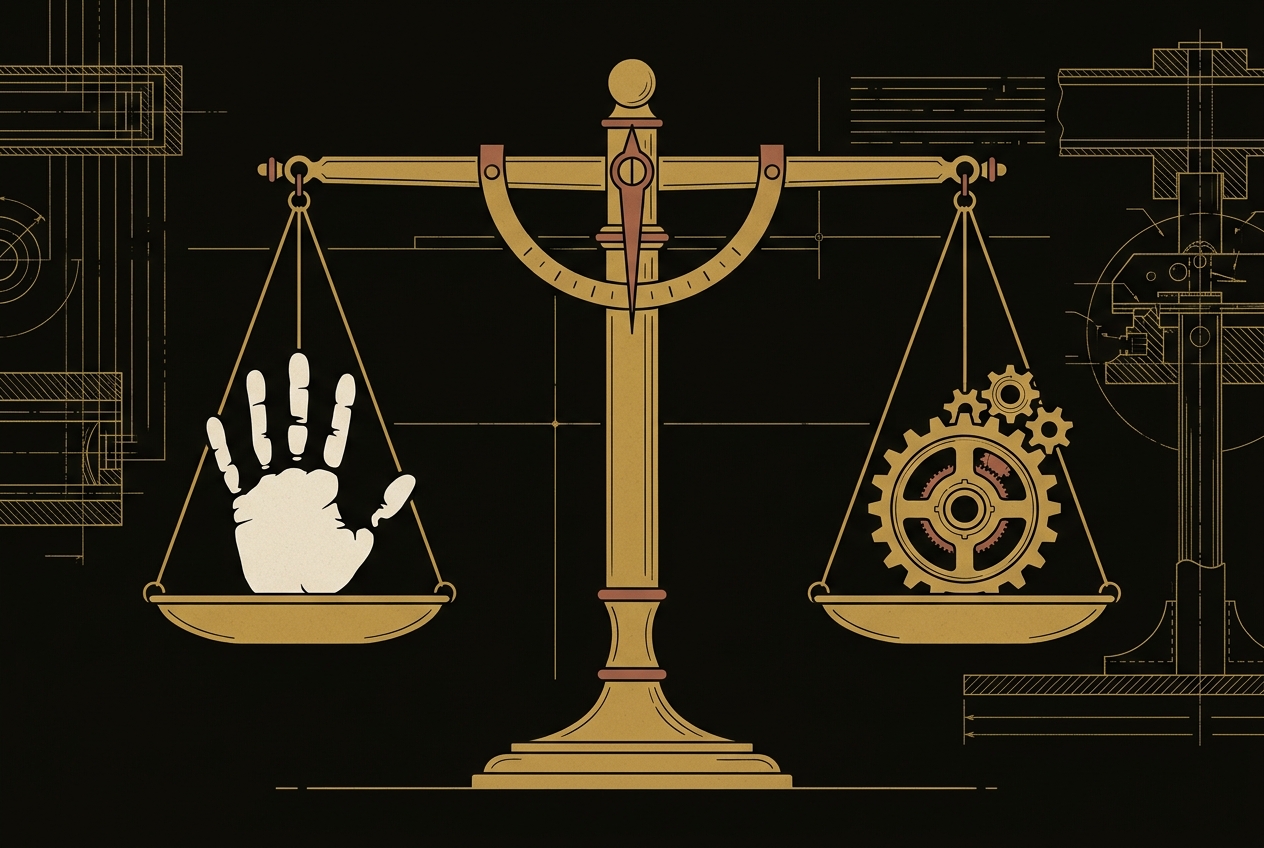
You don't own the output of your prompts. That’s the hard truth the US Copyright Office keeps hammering home, whether you like it or not. You can type a novel’s worth of instructions into a generator, but if the machine creates the actual pixels or sentences, you’re holding a legal void. There is no magic percentage of human input that grants you protection. The law cares about creative control, not how much time you spent fiddling with sliders.
The line in the sand
You need to understand what the Copyright Office calls sufficient human authorship ai. If you look at the case of Stephen Thaler, the answer is zero. Thaler tried to register a work created entirely by an autonomous machine. The court ruled against him because human authorship is a constitutional requirement for copyright. You aren't an author if you’re just the guy who pressed the button.
Think about Zarya of the Dawn. This comic book had a human author who wrote the text and arranged the layout. The Copyright Office gave her a registration for the story and the arrangement of the frames. They denied protection for the images themselves because an AI generated them. You can own the structure, but you can’t own the machine-made content inside it.
The Office uses a test called the human authorship requirement. It checks if the creative spark comes from a person or a tool. If the tool determines the outcome, you aren't the author. You’re just a user.
Why control matters
You have to exert creative control over the final expression. This isn't about the size of your input. It’s about whether you made the choices that lead to the final look or sound of the work. If you generate a thousand images and pick the best one, the Office considers that a selection process. Selecting isn't the same as creating. You haven't changed the image, so you haven't added the human expression required for copyright.
Maybe you edit the output. You paint over the AI image. You rewrite the AI text. That’s where you start to find a foothold. If your human edits are deep enough to be considered a new work of authorship, you might register that specific version. But be careful. You only protect the parts you added. The background, the structure, and the raw machine output remain free for anyone to use.
You should know that statutory damages, which are the money you get if someone steals your work, range from $750 to $30,000 for each infringed work. If your work isn't copyrightable because it’s mostly AI, you have no claim to those damages. You’re wide open to copycats.
The cost of transparency
You have a duty to disclose. When you submit your work to the Copyright Office, you pay a filing fee of about $65. You must tell them exactly what the AI did. If you hide the machine’s role, the Office can cancel your registration later. That’s a bad day for your business.
The Office gives you a 3-month window after the work is published to register. If you wait, you lose the right to claim those statutory damages. You’re left with actual damages, which require you to prove exactly how much money you lost. That’s a mountain of a task in court.
Don't treat AI as a shortcut to ownership. Treat it as a tool that creates a liability gap. You have to fill that gap with your own, non-machine creative choices. If you don't show your hand, the Office will eventually call your bluff. They’ve been doing this for long enough to know when a prompt does the heavy lifting.
Defining the grey area
There is no chart for this. You won't find a rule that says "if you change forty percent, you own it." Every case is decided by a human examiner looking at your specific work. They look at your file and ask if the machine made the artistic decisions. If the answer is yes, they deny the claim.
You need to keep logs of your process. Keep your drafts. Keep your edits. If you get challenged, you’ll need to prove that you, not the machine, made the final call on the color palette, the phrasing, or the composition. Without proof, your registration is just a piece of paper that won't hold up in a fight.
Copyright law is designed to reward human labor. It’s meant to protect the things that come from our own brains. When you introduce a machine that predicts the next word or pixel, you’re inviting a third party into your creative process. The law doesn't recognize that machine as an author. It doesn't recognize the machine's labor as your own.
You’re playing a dangerous game if you rely on AI for your primary assets. You’re building your house on land you don't own. If you want to protect your work, you must be the one who does the creative heavy lifting. The Office isn't going to do you any favors. They aren't in the business of handing out monopolies to people who let computers do the work.
Read the Office guidance at copyright.gov before you send in your next application. They update their policies to reflect the reality of the tools we use. If you want to keep your work safe, you need to understand the rules before you hit submit. Check our methodology page to see how we track these rulings so you don't get caught off guard by a denial.
Related reading
- Can AI-Generated Content Be Copyrighted?
- Is AI-Generated Code Copyrightable?
- Can You Copyright AI Art?
- Every AI Copyright Lawsuit Worth Knowing: The Complete Guide
Want the record behind your own work? See capture your authorship record from the first prompt.
Want a contemporaneous record of how you authored your work?
Try it free